In my signature block on patternreview.com, I have a line that says, I don’t have a sewing machine problem, YOU have a sewing machine problem! Over the last few weeks, however, I have realized that I do, in fact, have a sewing machine problem. And it’s a pretty big problem at that, as far as sewing machine problems go. To explain the problem, let’s go back to the first sewing machine. (/insert Hollywood harp flashback music here)
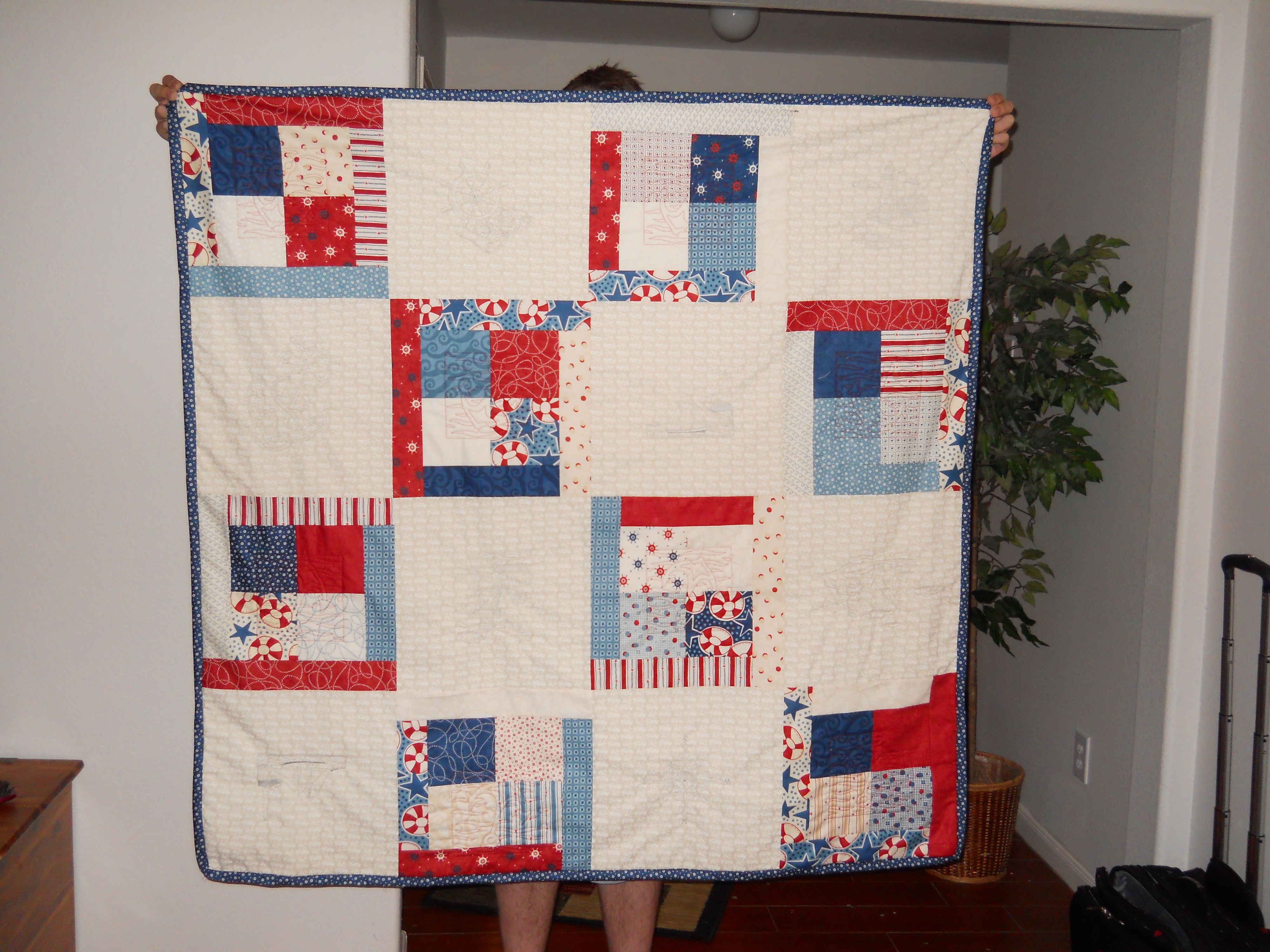
My first sewing machine was a Montgomery Ward mechanical machine that my mother let me use back when I was a young wife and mother in the early 1990s. She had always sewn our clothing for us, and I thought that’s what I should do as well. My first husband and I weren’t really dirt poor, but we didn’t make a ton of money, and times were sort of tight, what with three little ones, and I thought this was the way to clothe my children. I. Was. Wrong. I worked, and I had three children under the age of 6. I don’t know how Mom found time to sew with three little ones in the house, but she was amazing. I had no such luck.
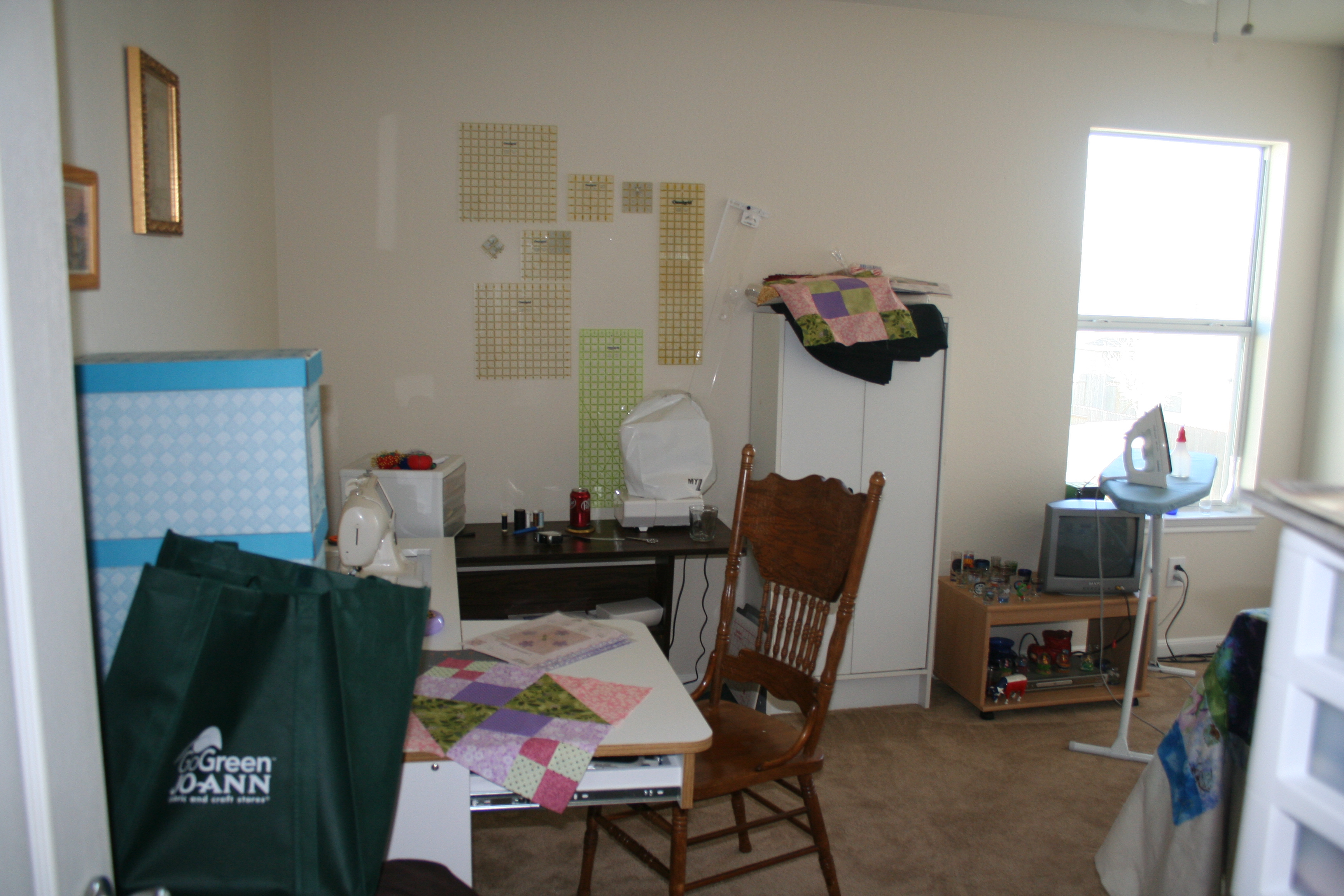
Fast forward a few years to about 2000, when my marriage imploded. I had two young children – 5 and 6 years old (the third child mentioned above was my stepson who was about 11 by this time) – a demanding job in the oil & gas industry, and I had returned to school in pursuit of my degree. I needed something to keep my mind busy and off of the divorce, but that I could do at home when my kids were around. On a complete whim, I bought a used Viking Rose sewing machine, and started to teach myself how to quilt.

After a year of using that machine, and not totally loving it, I stumbled across a used Brother PC-8500 sewing/embroidery combo machine. This is the machine that truly started it all for me. I fell in love with that machine, and used it just about every day. This was when my love affair with quilting really took off, and when I found my stride as a sewist. I used that machine for about six wonderful years until it started to have problems.
At that point, Mom had a Brother 4000D sewing/embroidery combo machine, and I thought it was the coolest machine EVER. It was also super expensive. But I did some calling around and found a shop that had a “refurbished” Brother 2500D combo machine for sale, and after talking with Chris, purchased it. I really enjoyed that machine, too, for about three years. Then although I don’t recall it happening, I must have fallen, hit my head, and had a fair amount of brain damage, because I decided to sell all of my sewing set up and focus on photography.
That didn’t last long, so about a year or later, long after my beloved 2500D had been sold, I went in search of another sewing machine. I happened upon a Janome 8900 at the very first QuiltCon in Austin, and was wholly impressed by its 11″ to the right of the needle, and the amazingly low price, because it was a class machine at the show. I hopped on it, and about a week after the close of QuiltCon, my Janome was ready to come home. Except when I got it home, I didn’t love it. It was loud in comparison to my Brother machines, it had an interface I couldn’t get used to, and it wasn’t a combo machine. I had used embroidery extensively in my quilting in past, and now that it was gone …

So in 2014, I bought the Brother DreamCreator VM5100, and I loved it, but that also started a dark period in my sewing life. Around that time, I became more involved in online sewing communities, and I allowed myself to be lured into looking at other machines because of actual or perceived shortcomings of my Brother sewing machine. For the last eight years, I have been in hopeless pursuit of the “perfect” sewing machine when it does not, in fact, exist. I have tried two more Vikings, two Pfaff, an Eversewn, a couple of Amazon level Brothers, and two Berninas in that time period. And let me tell you …

I should have just stuck with the Brother dealer machines.
It hurts a little to admit that, but it’s true. I should have stuck to my tried and true Brother sewing machines. I have admittedly had fun with the machines I’ve had over the last eight years, but I’ve spent a lot of money on them, and lost a lot of money on reselling or trading them, all to find out that I truly prefer my Brother sewing machines to anything else on the market.

If my husband heard me say that, he might lose his ever loving mind.

So, where do I go from here? I’m not really sure. Chris may have already figured out that I’m not totally in love with the Bernina 570QE, in large part because I’ve pretty much told him that. Also, I’ve been looking at Brother sewing machines lately, ostensibly because I want a machine with a wider throat, and because he told me that when he got promoted, I could get the “big” sewing machine. It has not been lost on him that my research has not been in to the Bernina 880 or 790 Plus, but the Brother Luminaire and Stellaire machines. My biggest complaint, and ongoing concern with the Bernina, is that they are all 9 mm machines at that level, and I’m not thrilled with the one I have.
What have I learned from all of this, you may wonder?
- Don’t listen to what others say is their “favorite” machine. I always say, when someone asks me about buying a machine, Do not be swayed by others. Try all the machines and decide which one suits your personality and sewing style. I should listen to my own advice more, though I guess, in a round about way, that’s exactly what I’ve been doing – extended test sews.
- Stay away from sewing machine salespeople, unless you really are in the market for a new machine. Do your research BEFORE you walk in to a machine shop and determine in advance which features are most important to you. Know what kind of sewing you want to do, and what kind of fabrics you intend to sew.
- Bring samples of your projects with you to try out the machines. Instead of sewing two flat layers of cotton fabric together, take a couple of quilt blocks you’ve been piecing, or a bit of the denim you used for last month’s jeans construction. Fold the denim up and hem it, then try to “repair the rip” by sewing two hemmed pieces together. Use a bit of chiffon to determine how well the machine handles delicate materials. Put the machine through its paces based on how YOU sew.
- Don’t use a scattergun approach to sewing machine research. Think about the projects you’ve made over the last year, and what you would have done differently if given the chance. Consider projects you wanted to do but rejected on the basis of construction. Determine what would have made the project more palatable. Look for machines that are capable of those things and test them out.
- Never, ever, ever, ever, EVER … walk into a shop that sells machines and tell them, “I don’t really know what I want.” Go in with at least an idea of what you think will suit your needs. Be steadfast in what you must have, then from there, don’t be swayed by a lot of bells and whistles that you know you won’t use. Don’t buy a machine with so many capabilities that you think, Maybe I can grow in to it one day. Also avoid machines that you think, That’s nice, but when would I ever use that? By the same token, don’t buy machines that you think, Well, I’ll just start here and in a year or so, I’ll upgrade. Try to think of a sewing machine as an investment you want to keep for a few years. You want enough space to grow, but not so much space that you will never use the features.
For example, I have looked at the Brother Luminaire, which is a very expensive machine. As the salesperson walked me through the features, I could see where so many of them would have been helpful in previous projects I’ve done. There is a projector on the machine, and a lot of people cannot envision when they would need that. I, on the other hand, have on several occasions wished that I had an easy want to “audition” decorative stitches that I wanted to use in different areas of my quilts.
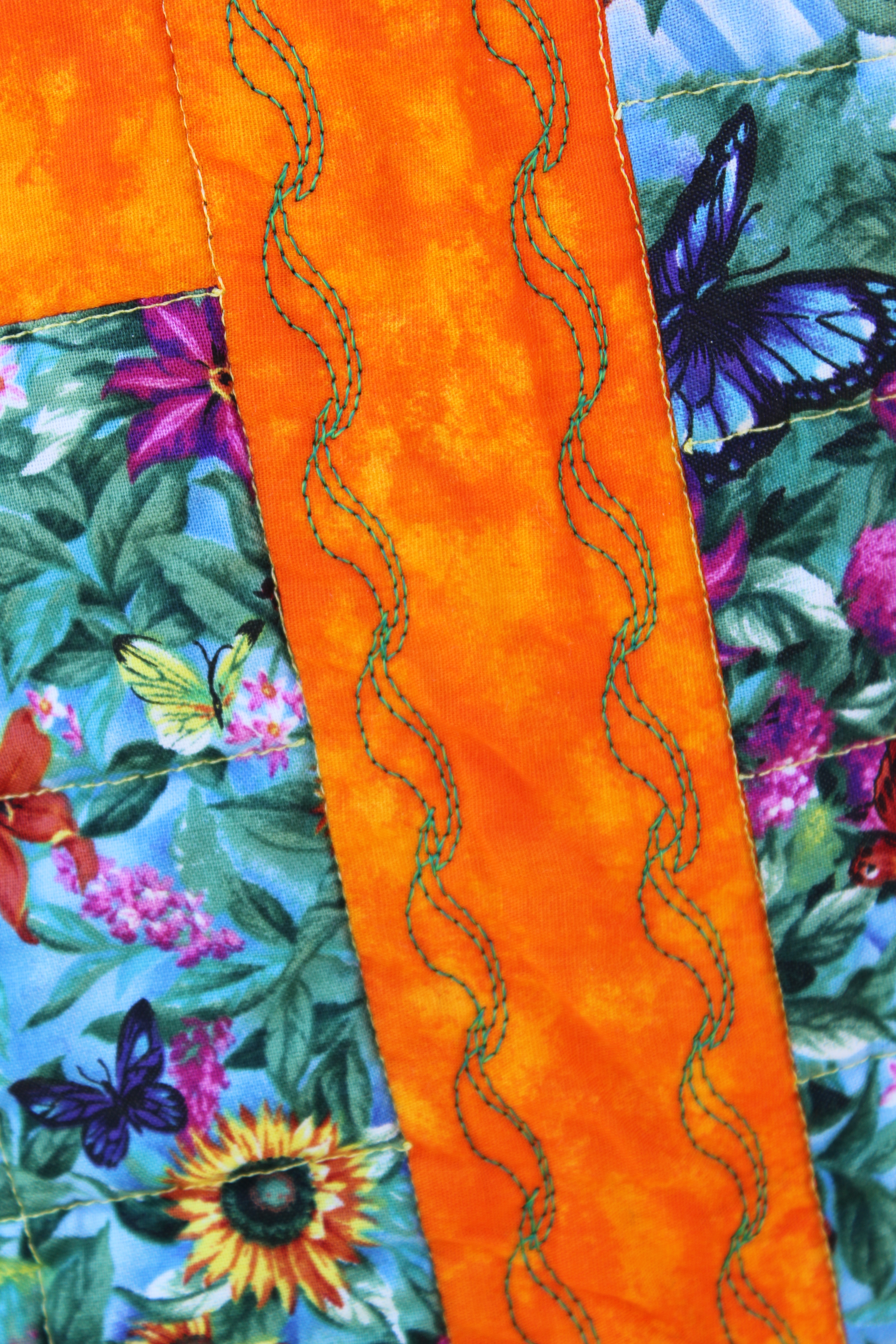
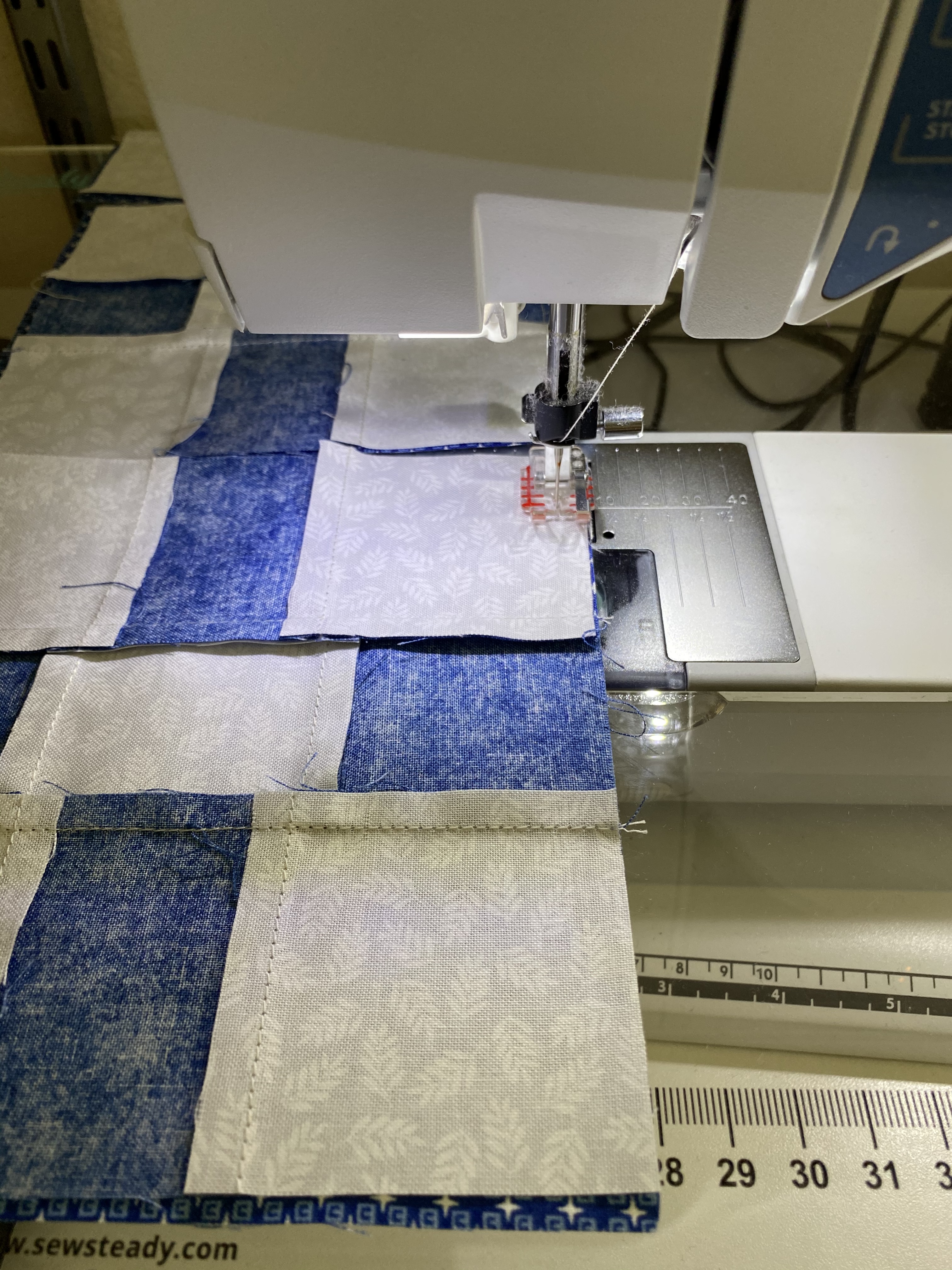
In this particular example, it would have been very nice to be able to use the projector on the Brother Luminaire to choose a stitch for the border of this quilt. I can SEE how that feature would make my particular style of quilting easier. It’s a $15,000, machine, but I am frankly tempted because it would make my quilting more fun, easier, and I have on several occasions thought that something like this would be beneficial. But would that be a feature that someone who can free motion quilt (FMQ) well and never uses the decorative stitches on their current machine would use? I’m not sure it is.
It bothers me, a lot, to think of all the machines I’ve bought over the last few years, and how much I’ve paid for them all, just to come back to where I started. I seriously feel like I should do some serious soul searching and decide if I want to go with the Brother brand, and when I decide I do (because I have a feeling that’s where I’ll land), just commit to it and stop screwing around with all this other stuff. If I’m being honest, a fair amount of the joy of quilting has left me because I spend so much time fretting over my sewing machines. Isn’t it time I put all of this behind me, and just be happy?
 Texas Quilt Girl