One of the most annoying things about getting older is that things start to hurt that have never once bothered you in the past. I’ve been dealing with a painful heel for months, and I hit my limit yesterday when I realized that driving has become very painful and I need to do something about it. Walking hurts, driving is excruciating, and even quilting has become quite difficult because I can’t put a lot of pressure on the foot pedal.
Since I can’t sew at this point, I’ve been coloring, as I talked about last week. I recently bought a set of “budget” colored pencils on Amazon, and I’ve been trying them out. Let me begin this post by saying I am not an artist. I am not qualified to review art supplies from an artist’s perspective. I am, however, a collector of art supplies, and I enjoy using them – a lot. For many years, I resisted buying certain things like colored pencils and markers, not because I didn’t want to use them, but because I’ve long held the belief that the best art supplies are the most expensive art supplies, and I’ve always wanted the “best” art supplies. My opinion about that hasn’t really changed over the years – objectively, the best supplies tend to be expensive. I realize, though, that I have missed out on several years of enjoyment by perhaps stubbornly holding that opinion.
Since I’ve retired, I’ve realized that what I enjoy isn’t “only” quilting, decorating or any other single craft. I enjoy trying new things, and I’ve expanded “things” to include art supplies of all types. With that in mind, I’d like to share my first impressions of the Kalour 180 colored pencil set with you.
I purchased the Kalour 180 pencil set, and it arrived the same day (yay Amazon sub-same day shipping!). I was quite impressed when they arrived. When I opened the shipping package, they were inside a sturdy cardboard box, and inside the box was a padded foam bag. Kalour packages their colored pencils much the same way that Prismacolor packages theirs in a tin box.
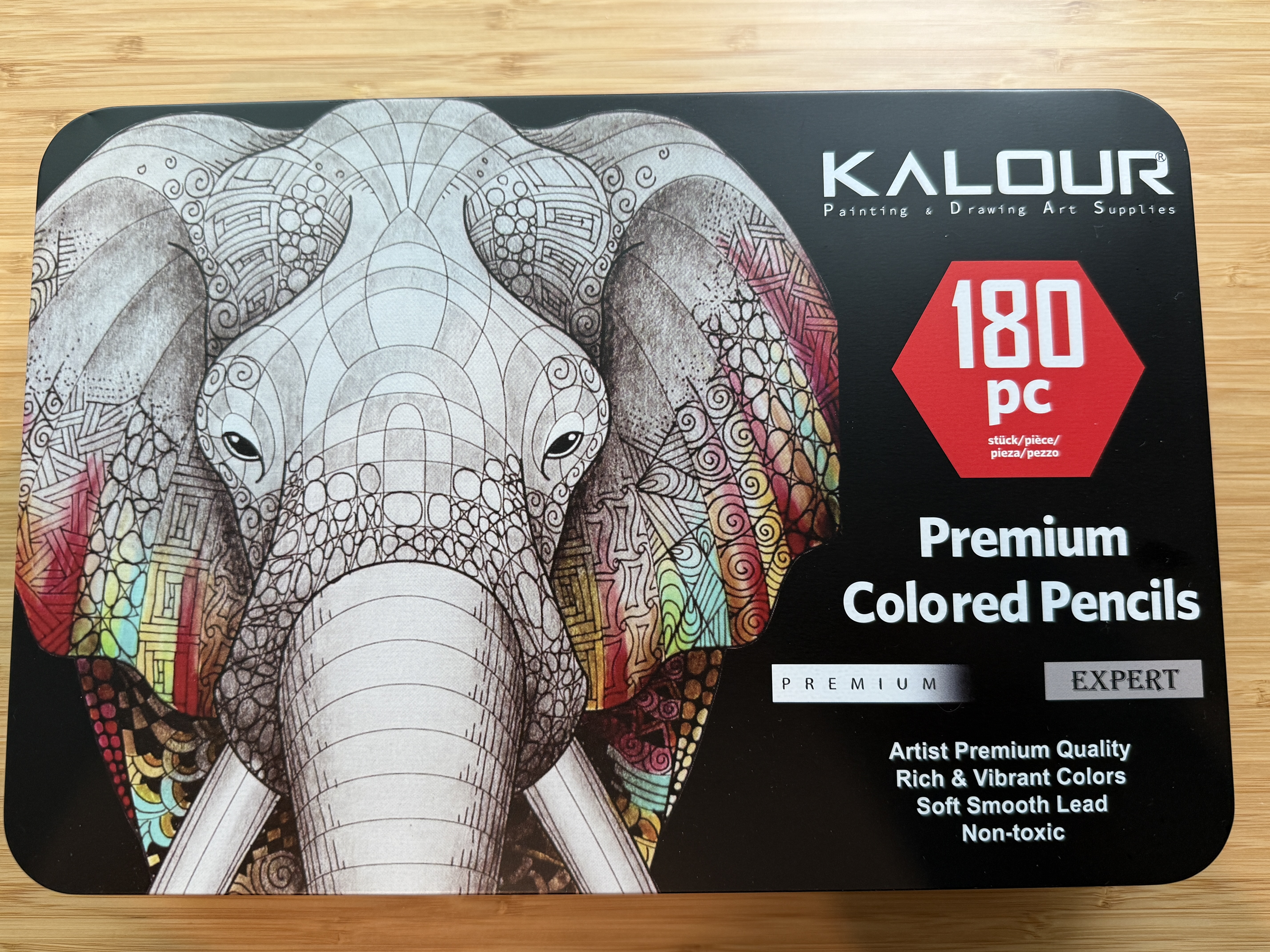
When I opened the tin, the pencils were already sorted by color family, which is nice, because Prismacolor Premier sets don’t seem to be sorted. Kalour also includes a swatch chart inside the tin, something else Prismacolor doesn’t do.
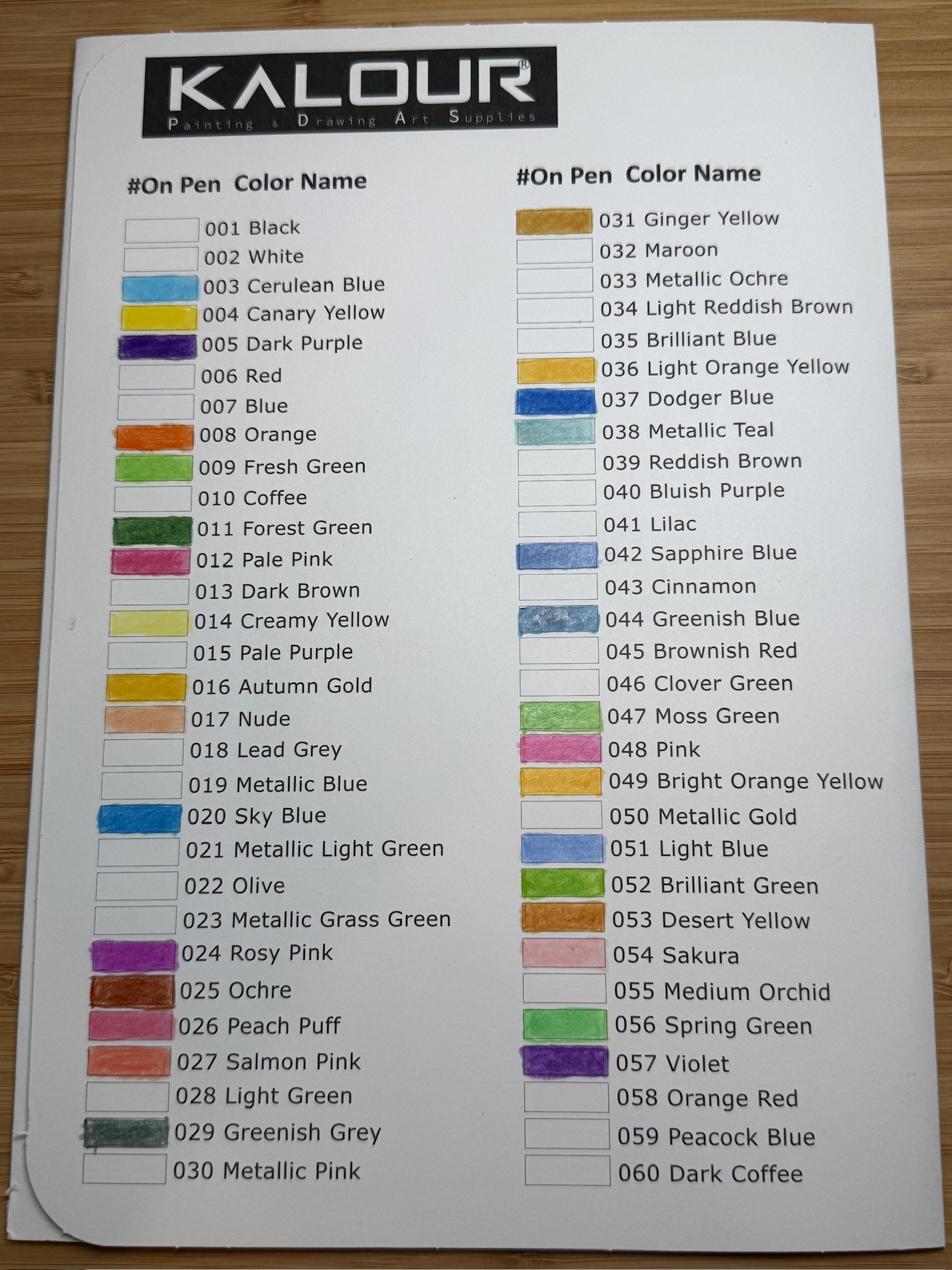
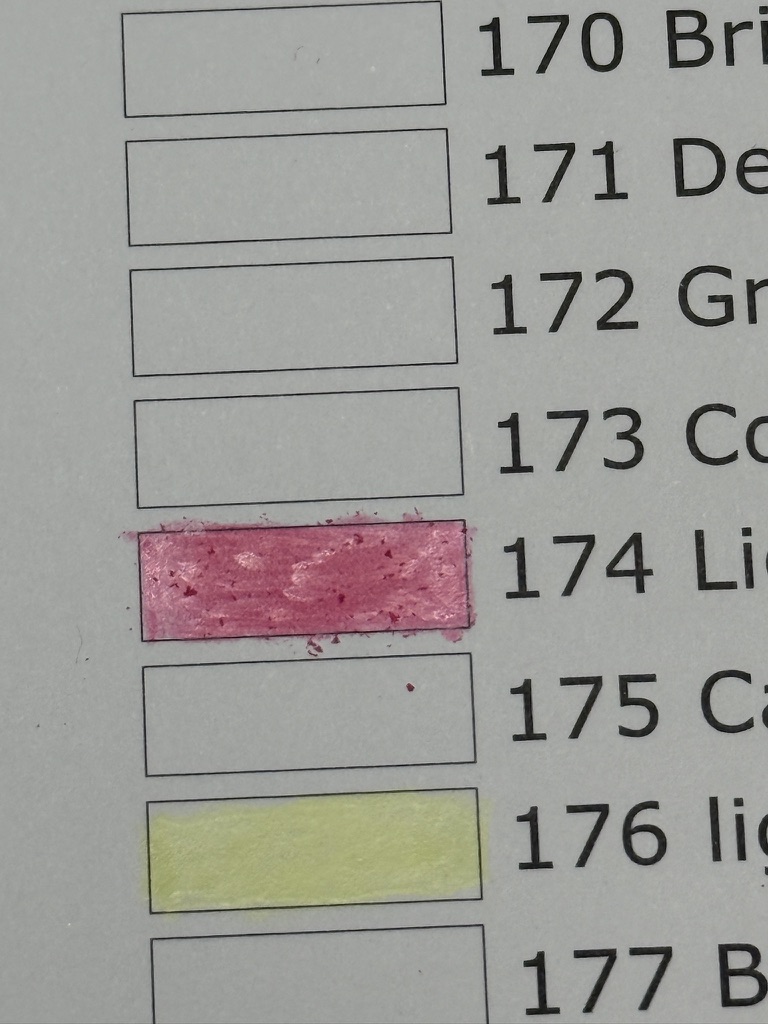
I have been using the pencils this week, and I have a few observations. This set of pencils is designed for someone who wants a nice coloring experience, but who is either on a budget or is just starting out. They are wax core pencils, much like the Prismacolor Premier pencils, and they do a fine job with coverage. I did notice, however, that they can look a little mottled or inconsistent as I was swatching some of them. They also tend to leave more wax/pigment on top of the page than Prismacolor does. Since there are 180 colors in the tin, and I didn’t want to spend an entire day swatching pencils, I decided to fill in the color blanks as I use them.
Once I started using them to color in one of my books, the mottled look wasn’t nearly as much of an issue, and they glide on paper fairly smoothly. I did notice that some of the lighter colors required a heavier hand than others, but overall, the Kalour pencils performed very well. The picture below is straight “plain” coloring with no blending stumps, or any other “tricks” you sometimes see from accomplished colorists, which I clearly am not.
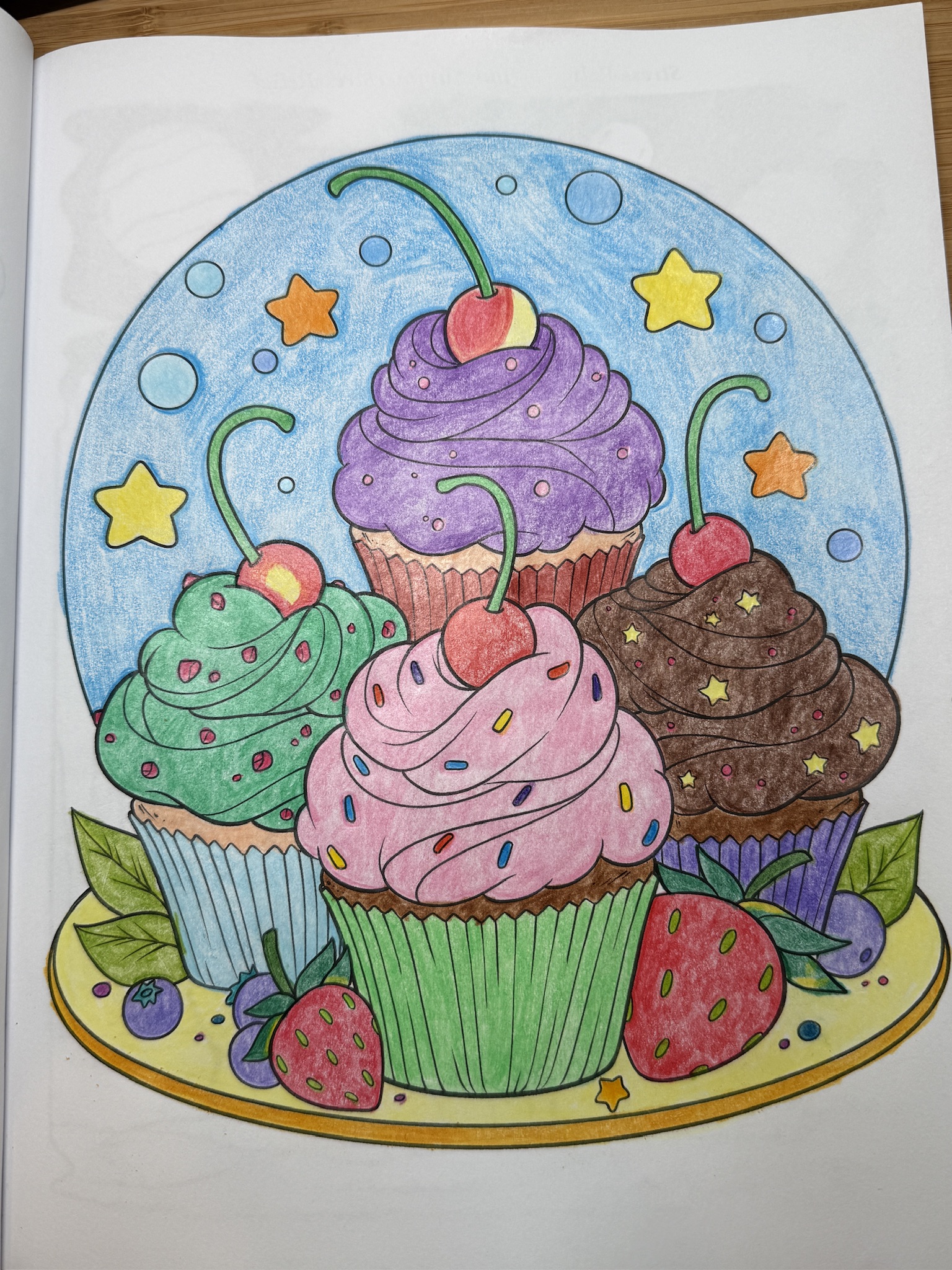
I did have some issues getting the pencils to blend, but is that a big consideration when you’re just starting out? No, it really isn’t. People want budget pencils and markers that will mimic top of the line premium art supplies, or worse, to mimic painting, and they aren’t going to be able to do that. But they can provide a wonderful outlet for someone who isn’t looking for artist-quality supplies.
I was completely prepared to be, at best, lukewarm about these pencils, but they really surprised me once I started to use them in “real-world” applications, if you can consider adult coloring a “real world” application for colored pencils. I found the pencils to be an exceptional value for the price. They check most of the boxes for colored pencils. They won’t be mistaken for Prismacolor pencils, to be sure, but they provide nice coverage and an enjoyable coloring experience. I don’t know about you, but I’m not really looking for much more from a colored pencil set.
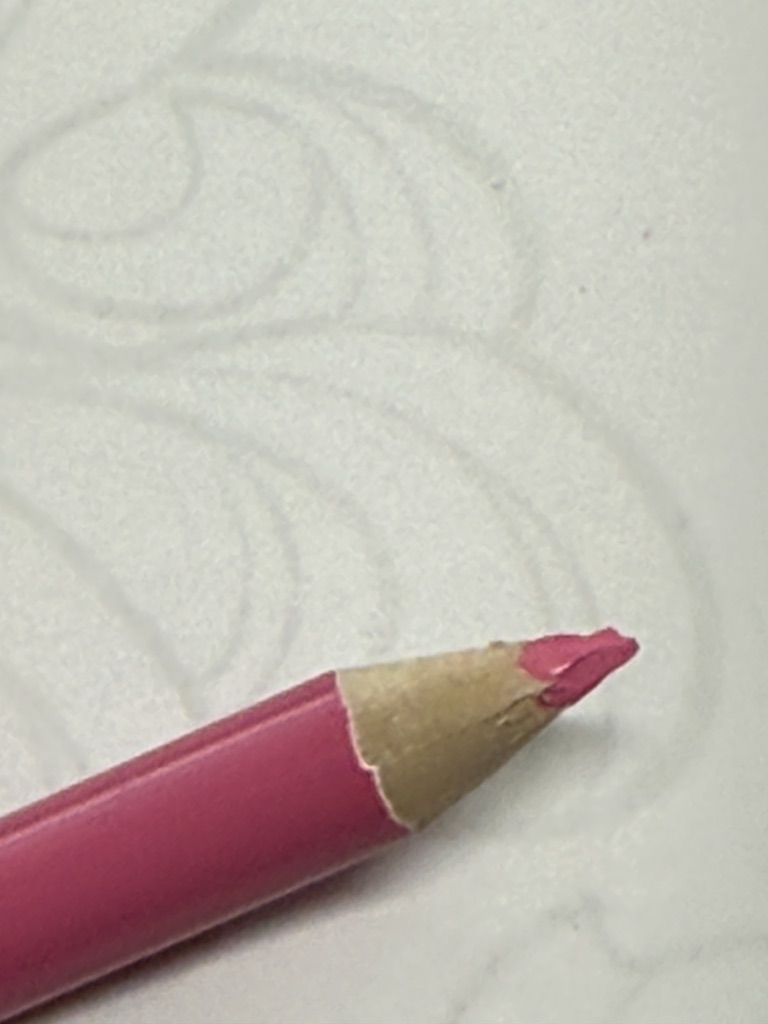
The only thing about the pencils that was a little disappointing is that the core can splinter a little when sharpened, which I have not experienced with the Prismacolor pencils I own. It isn’t a deal breaker, but it happens with both my Prismacolor Premier sharpener, as well as the Staedtler sharpener I keep with my art supplies.
So, are these pencils worth purchasing? My answer is a resounding yes. I wasn’t sure how much I was going to like using these pencils, and I had my doubts. I paid about $35 for the 180 pencil tin. Compare that to the Prismacolor 132 pencil set that sells at Michael’s for $160, or Amazon for $140, and I think it’s obvious which one is the “better value” when based on price alone. But price is not the only place the Kalour pencils shine. Granted, the swatch card gives some very uneven results, but when I started to actually color a page, my opinion changed substantially.
If you were to ask me, are the Kalour as good as Prismacolor, my answer would be no, not really. But if the question is, does the Kalour earn a place in my craft room, then hands down, the answer is yes. They are a budget pencil doing budget pencil things; they will never be “artist quality” pencils in my opinion. But for someone who’s just starting out, looking to get into coloring, or can’t see their way to spending a lot of money for something like pencils that are by nature, consumable and will need to be replaced eventually, these pencils do an amazing job.

